
Insourcing vs Outsourcing: Building the Right Fulfillment Model for Logistics Operations
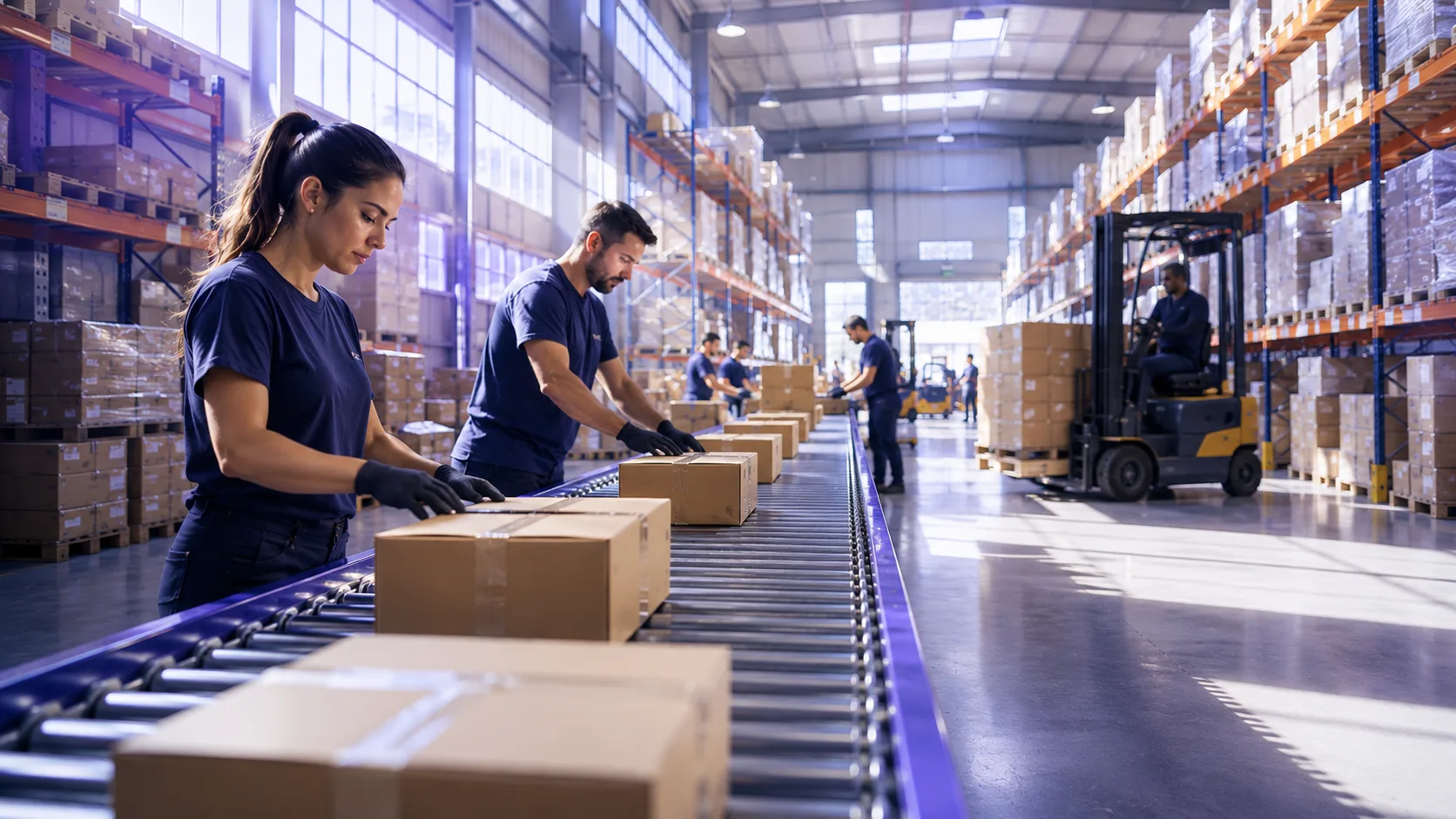
Every growing logistics or fulfillment operation eventually hits the same fork in the road: keep building internal capacity, or bring in a specialized partner. Neither path is universally right. The decision usually comes down to how fast you're scaling, how seasonal your volume is, and how much operational complexity you're willing to own. Here's a framework for thinking it through.

What "Insourcing" Actually Buys You
Keeping fulfillment in-house means direct control over every touchpoint — hiring, training, quality standards, warehouse layout, software stack. For companies with stable, predictable volume and a well-defined process, that control can be a genuine advantage: fewer handoffs, faster internal feedback loops, and full ownership of the customer experience from warehouse to doorstep.
The tradeoff is that every gain in control comes with a matching gain in fixed cost and management overhead. Insourcing means your fulfillment team scales with your worst month, not your average one.
What Outsourcing Adds to the Equation
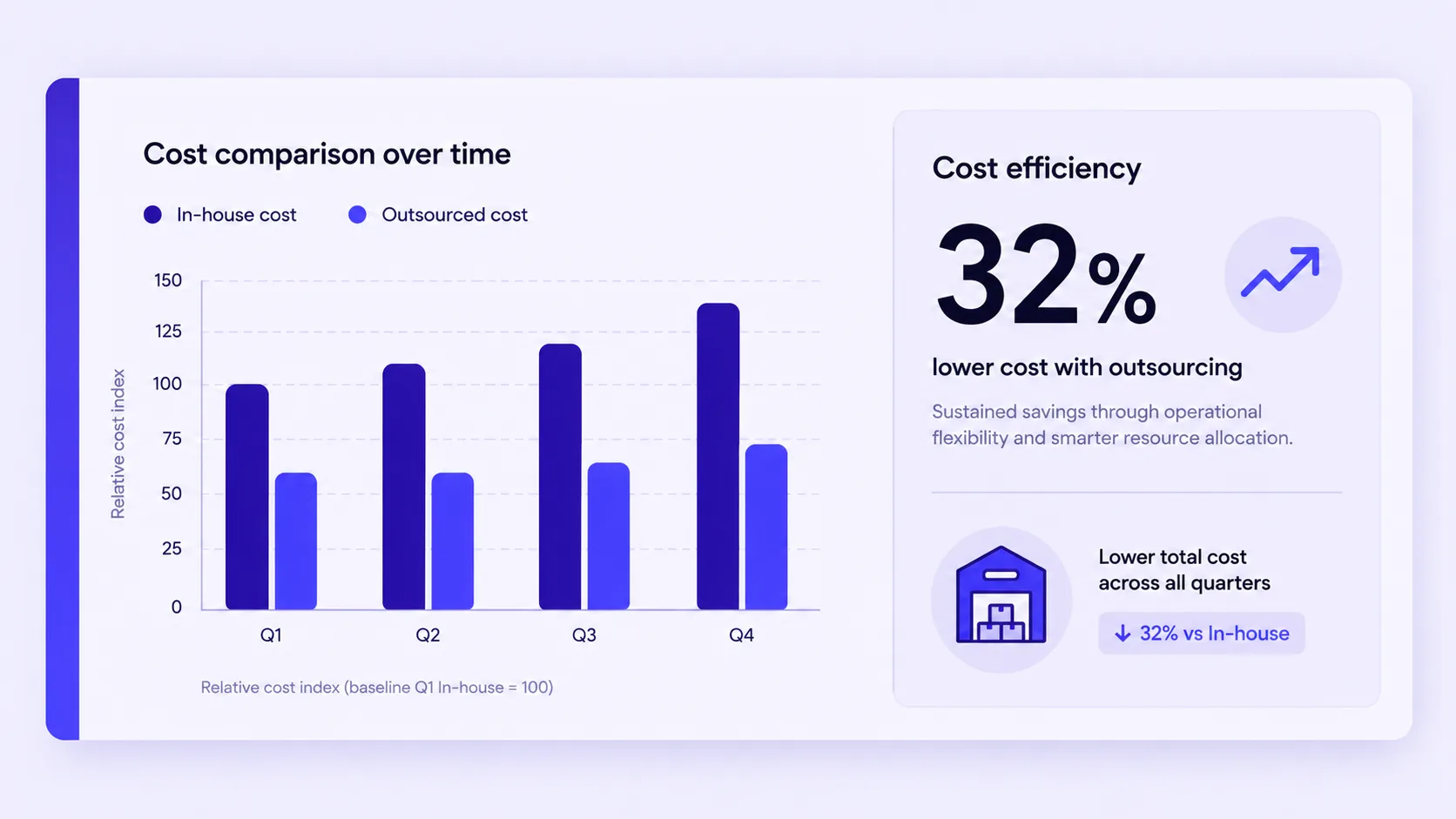
Bringing in a 3PL or fulfillment partner shifts fixed costs into variable ones. Instead of carrying warehouse space, staff, and systems year-round, you pay for capacity as you use it. This matters most for two kinds of companies: those with sharp seasonal swings (holiday retail, travel, event-driven demand), and those expanding into new regions where building a local operation from scratch would take months.
A good outsourcing partner also brings infrastructure you likely haven't built yet — carrier relationships, multi-region warehousing, and systems for peak-season surges — without the multi-year investment.
The Real Cost Comparison Goes Beyond the Invoice
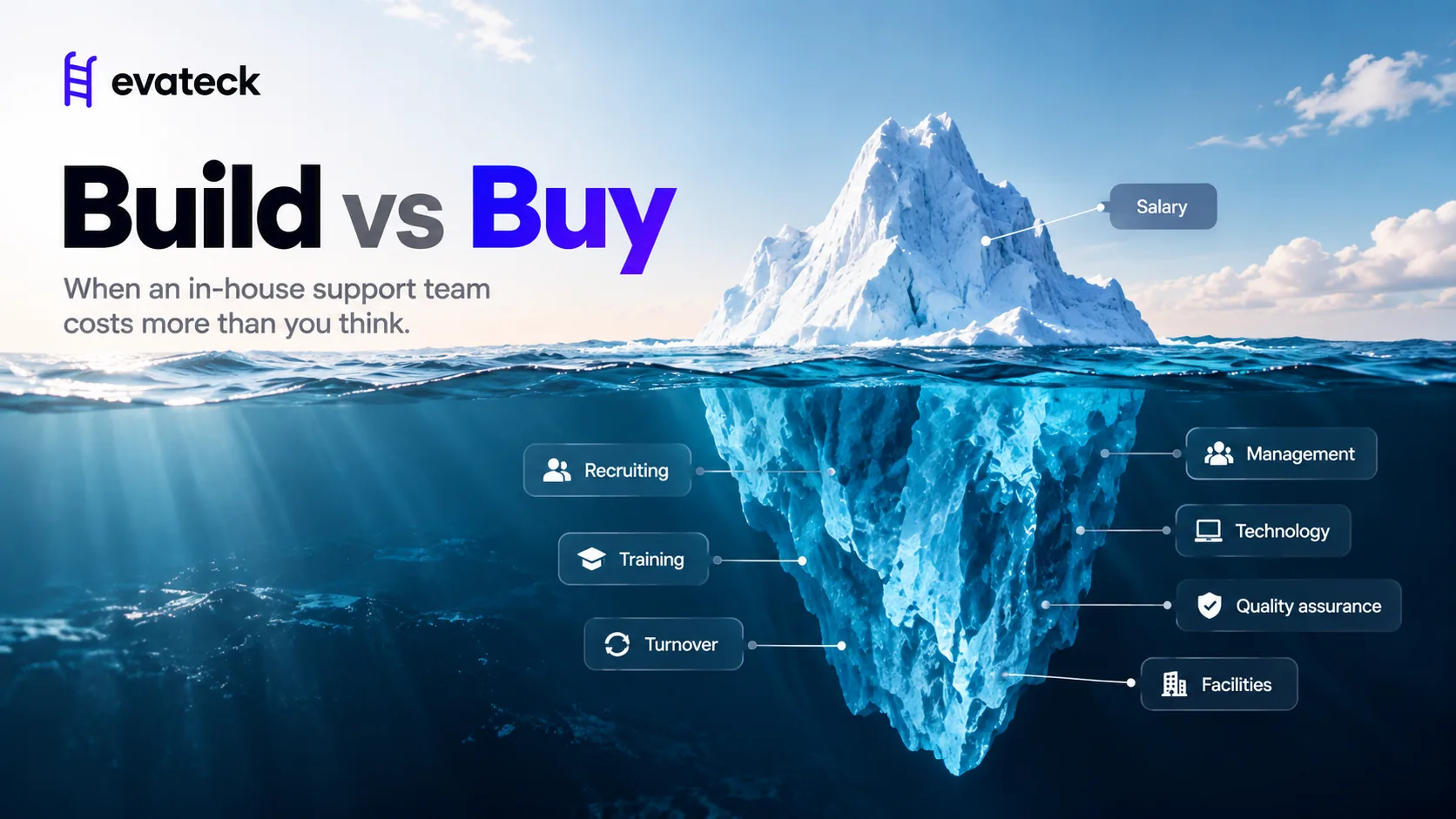
The most common mistake in this decision is comparing only the line-item cost of outsourcing against current in-house payroll. That comparison misses two things: the fully loaded cost of insourcing (recruiting, turnover, software licensing, warehouse lease escalation, management time), and the opportunity cost of your team's attention. Every hour your operations lead spends managing forklift schedules is an hour not spent on strategy.
A fairer comparison looks at total cost per order at your actual volume curve — including the slow months — not just at steady-state throughput.
Signs You're Ready to Outsource Fulfillment
A few patterns tend to show up right before companies make the switch:
- Order volume swings more than 2–3x between peak and off-peak months
- You're entering a new geographic market and don't yet have local infrastructure
- Fulfillment errors or shipping delays are increasingly linked to internal capacity limits, not process gaps
- Your ops team is spending more time on logistics firefighting than on process improvement
- You've outgrown your current warehouse footprint faster than your lease allows you to adjust
None of these alone is a verdict — but two or three together are usually a strong signal.
The Hybrid Model Most Companies Actually Land On
In practice, the choice is rarely all-or-nothing. Many companies keep a core in-house team for their highest-volume, most predictable SKUs or regions, and route seasonal overflow, new-market launches, or specialty categories to an outsourced partner. This hybrid approach preserves control where it matters most while absorbing volatility through flexible capacity elsewhere.
The key is treating it as a deliberate architecture, not an accident of which orders happened to overflow first.
How to Choose a Partner Once You Decide to Outsource
If the decision points toward outsourcing, the partner selection matters as much as the decision itself. Look for:
- Transparent, order-level cost breakdowns rather than opaque bundled pricing
- Proven experience in your specific product category (fragile goods, cold chain, oversized items all require different handling)
- Real-time visibility into inventory and order status — not weekly reports
- A track record of handling peak-season surges without service degradation
- Clear escalation paths when something goes wrong
The right partner should feel like an extension of your operations team, not a black box you hand orders into and hope for the best.
Getting this decision right isn't about picking a permanently correct answer — it's about matching your fulfillment model to where your business actually is today, with room to adjust as volume, geography, and complexity change.
Logistics is just one front of a much wider shift — see why 80% of businesses will rely on outsourcing by 2030.
Related posts

Get insights from our team
Once a month, no spam. Operational playbooks, case studies, and CX trends.