Automation Meets Empathy: How the Best BPO Teams Balance AI and People
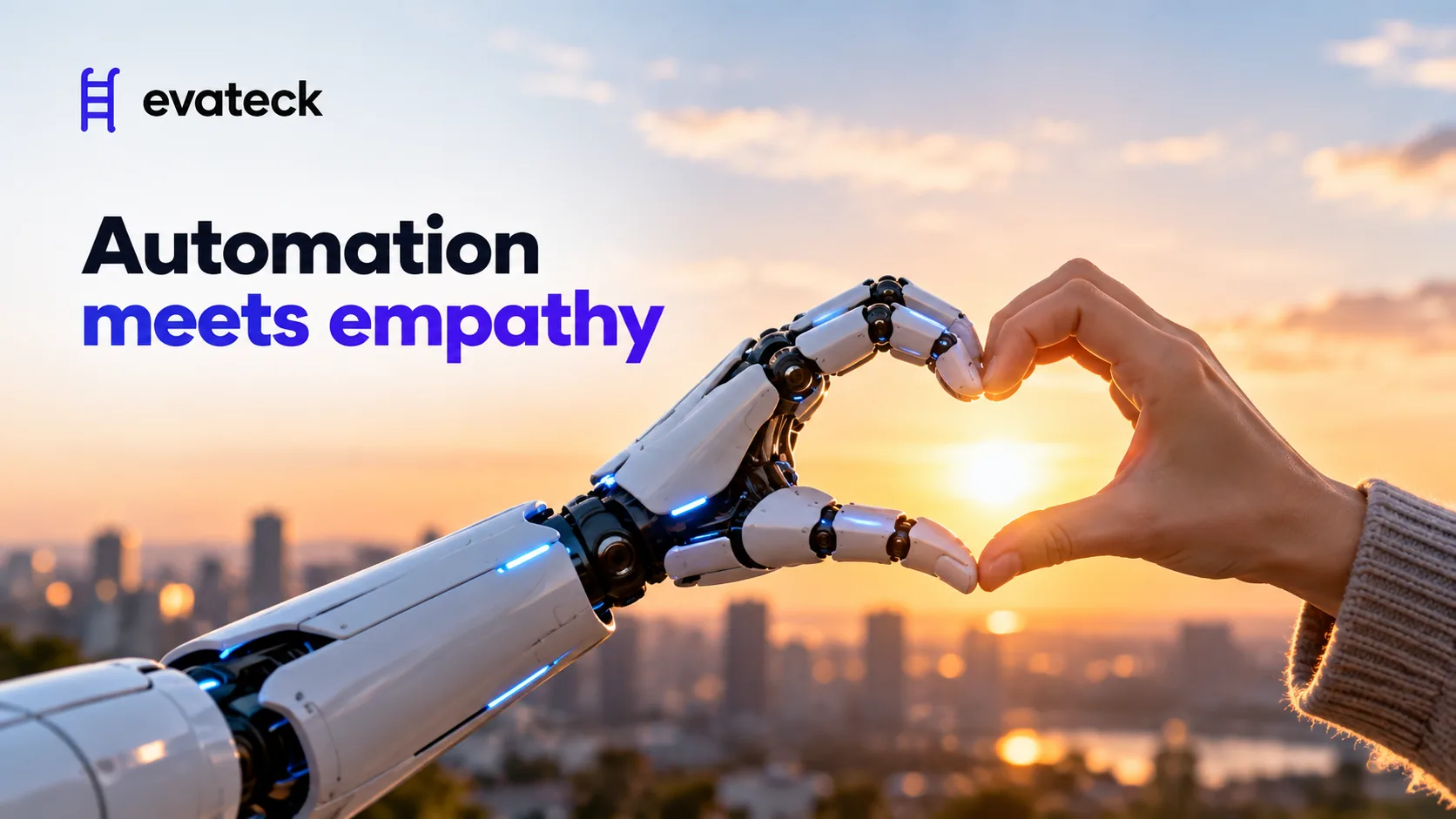
Ask the internet whether AI will replace customer support and you'll get two confident, opposite answers. One camp says bots will handle everything within a few years. The other insists customers will always want a human. Both are half right — and that's exactly the point. The future of support isn't automation or empathy. It's knowing, in every single interaction, which one the moment calls for.
The numbers everyone's arguing about
The data looks contradictory until you read it closely. Around 79% of Americans say they prefer dealing with a human over an AI agent (Zendesk), and roughly 75% specifically want a person for complex, sensitive, or emotional issues (SurveyMonkey). Yet 51% say they'd rather use a bot when they just want an immediate answer.
That's not a contradiction — it's a preference that flips depending on the task. Consumer sentiment isn't anti-AI; it's anti-bad-AI. When automation resolves an issue quickly and completely, people stop caring who — or what — solved it. When they sense it's a wall between them and a real answer, they resent it. Tellingly, 92% of businesses report higher CSAT after implementing AI well.
What automation is genuinely good at
For a large slice of everyday volume, AI is now the better tool. It handles roughly 45% of incoming queries without human help, climbing to around 80% for routine, structured requests like order tracking or password resets. It never sleeps, never queues, and answers in seconds.
It also makes human agents better. The NBER "Generative AI at Work" study found AI assistance lifted issues resolved per hour by about 14% on average — and around 34% for less-experienced agents, who benefit most from real-time suggestions. The market has noticed: conversational AI alone is forecast to reach roughly $41 billion by 2030 (Grand View Research).
What still needs a human
Automation hits a ceiling exactly where the stakes rise. A frustrated customer, a billing dispute, a health or money question, a churn risk on the line — these need judgment, tone, and accountability a script can't fake. It's telling that even as adoption climbs, about 95% of customer service leaders say they plan to keep human agents. And while Gartner projected that 20–30% of agents could be replaced by generative AI, roughly half of the companies that planned cuts are expected to reverse them — rehiring once they realize AI handles the volume while people handle the difficulty.
The pattern is consistent: AI scales the routine, humans own the hard and the emotional. Get the handoff between them right and you win; get it wrong and you lose the customer at the worst possible moment.
The model that actually works: human in the loop
The winning setup isn't "AI first" or "human first" — it's AI and humans in one workflow:
- AI on the front line for speed. Instant answers to routine, high-volume questions, available 24/7, in any language.
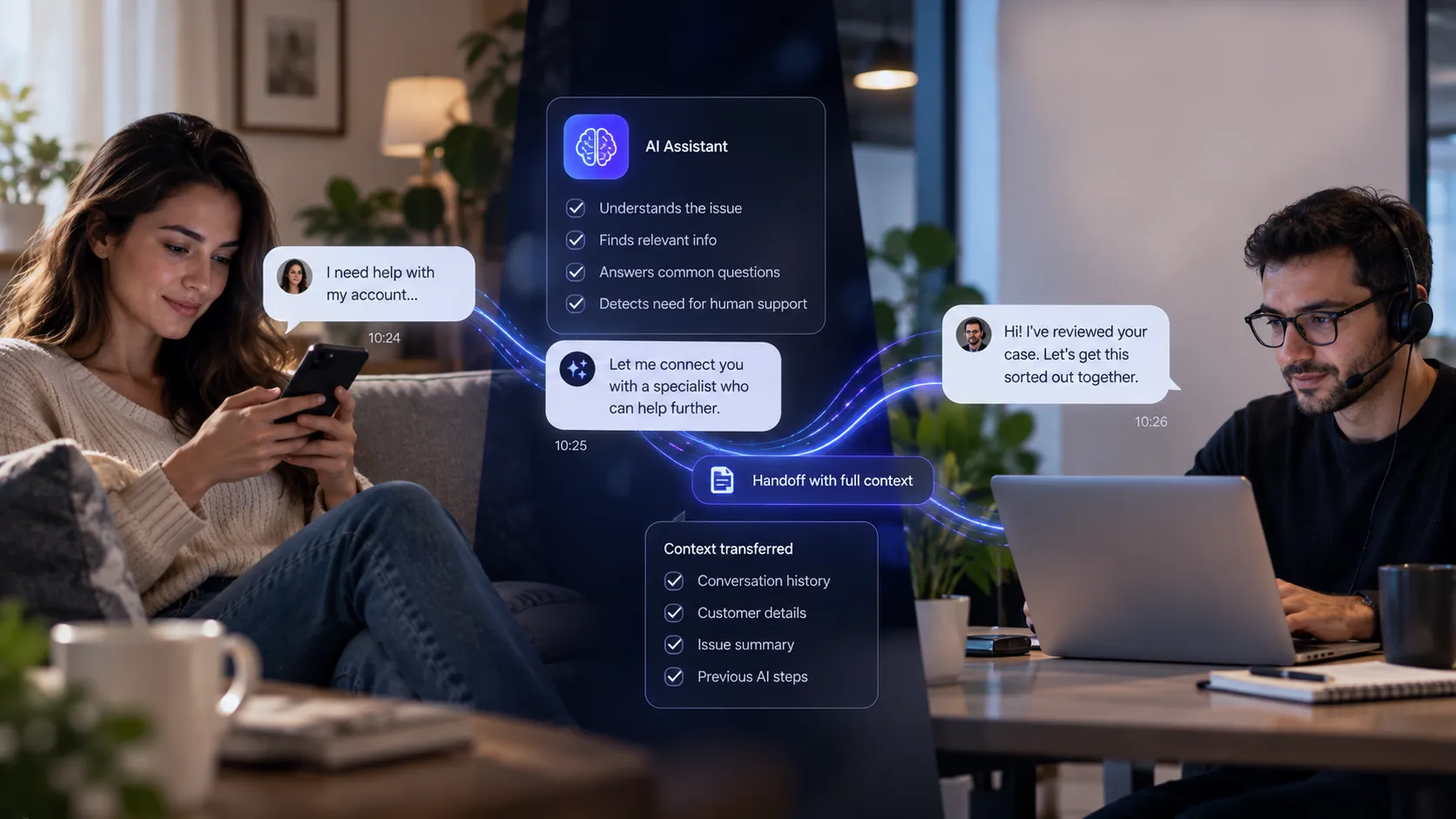
- Smart escalation to people. The moment a conversation turns complex, sensitive, or emotional, a trained human takes over — with full context, not a cold restart.
- AI behind the human. Even on live tickets, automation drafts replies, surfaces the right answer, and flags intent, so agents resolve faster and more consistently.
- Transparency by default. Over 90% of businesses and consumers agree AI use should be disclosed — hiding it erodes the trust the whole system depends on.
The catch is that this only works when agents are trained and equipped. Productivity gains evaporate when teams are handed tools with no support — and more than half of agents report getting no AI training at all. The technology is the easy part; the operating model around it is where most companies stumble.
Why this is where BPO earns its keep
Building this balance in-house means hiring, training, tooling, and staffing across time zones — then keeping it all running. That's exactly the operation a BPO partner exists to run. At Evateck, we pair smart automation with hand-picked, trained teams who live inside your tools and your tone: AI handles the routine at scale, our specialists own the conversations that matter, and everything runs 24/7, in 40+ languages, ISO 27001-aligned and GDPR-ready — live in under two weeks. Automation for efficiency, people for experience, one operation for both. Explore our BPO services.
Because the companies that win the next few years won't be the most automated or the most human. They'll be the ones that know, every time, exactly where one should end and the other begin.
Sources: Zendesk CX Trends, SurveyMonkey CX Study, Gartner, Grand View Research, NBER "Generative AI at Work" (2025–2026).
Related posts


Get insights from our team
Once a month, no spam. Operational playbooks, case studies, and CX trends.